

Made Outside the Building
Ralph Lauren, the Lo Lifes, and the argument that Cash Cobain should be the face of Ralph Lauren in 2026.

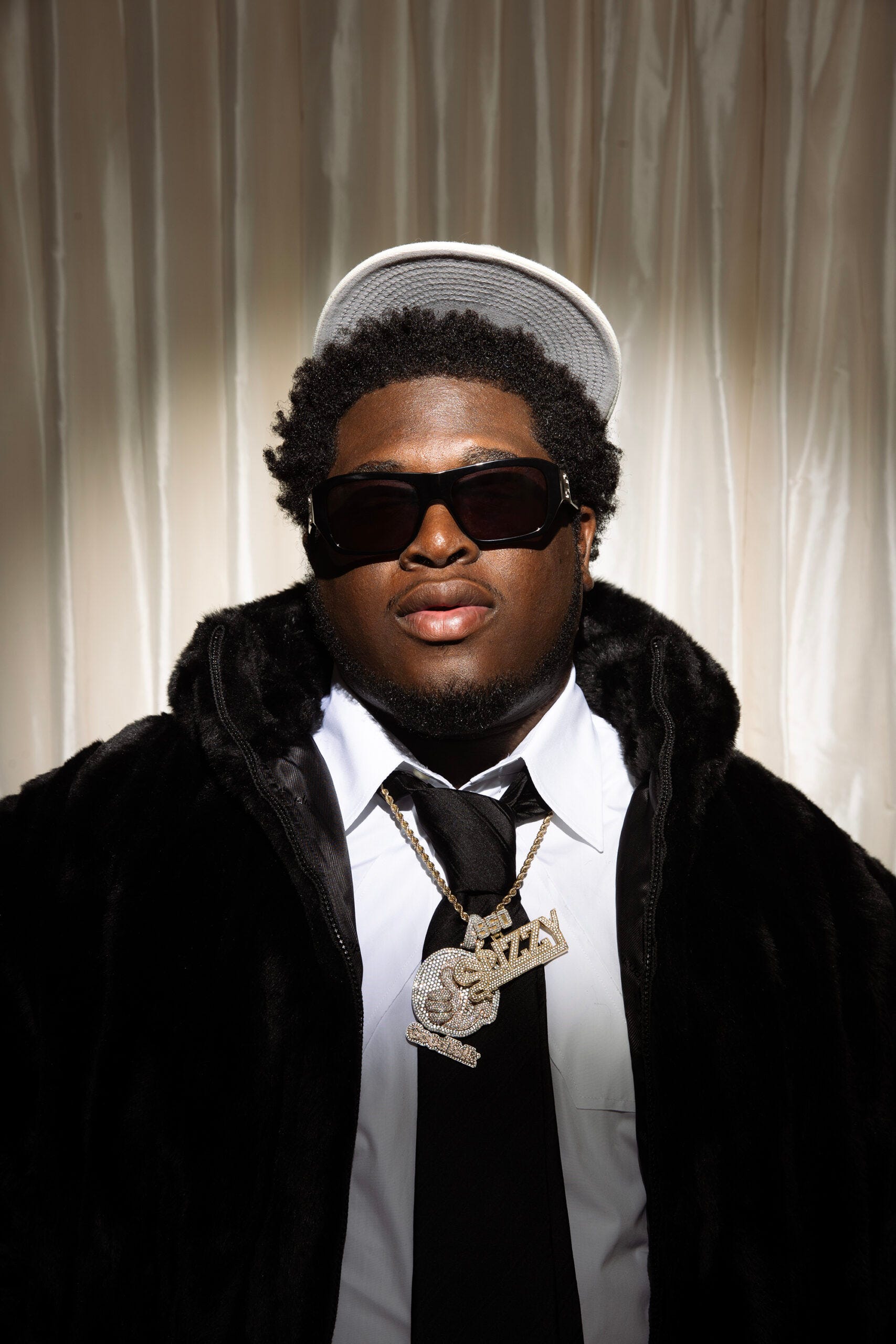
Ralph Lifshitz was born in the Bronx in 1939, the son of immigrants, and before he turned thirty he had changed his name and begun selling neckties out of a single drawer inside the Empire State Building. The ties were wide and expensive, and they arrived wrapped in a fantasy the young salesman had no claim to by birth. Polo fields and ski lodges, the crest and the country club, an old Anglo-American aristocracy that would never have opened its gate to a Lifshitz. He built the world anyway, in fabric and in advertising, and then he sold everyone else a way inside it. The official Ralph Lauren biography still tells the drawer story as the origin.
That is the first thing worth noticing about the company that became Ralph Lauren. The fantasy was recoded from the start, by a man standing outside of it, describing a life he could see clearly and had not been handed. Much of what has happened to the brand across the six decades since has been a version of that same act, performed by other people, on a schedule the company slowly learned to wait out.
Start with the strength it enters from. For fiscal 2026, Ralph Lauren Corporation reported revenue of $8.11 billion, up 15 percent and past $8 billion for the first time, with global direct-to-consumer comparable sales up 13 percent for the year. Ralph Lauren himself described the brand as standing, for nearly sixty years, for optimism and authenticity and a life well lived. Those are not descriptions of a clothing line. They are descriptions of a reservoir of symbols, an archive of meanings deep enough that new generations keep walking into it and coming out with something the company never printed on a lookbook.
The clearest proof of that came out of Brooklyn, and the company had nothing to do with authoring it.
In 1988, two boosting crews, Ralphie’s Kids out of Crown Heights and Polo USA out of Brownsville, joined into a single movement and called themselves the Lo Lifes. The FADER later documented their mission in one line: to accumulate as much Polo Ralph Lauren as possible, by any means possible. They wore the crest blazers and the ski jackets and the teddy-bear sweaters as a Brooklyn uniform, and in doing so they took the prep-school-and-country-club imagery Lifshitz had assembled and rewrote it into a language of status and belonging that had nothing to do with Yale. Thirstin Howl III, one of the crew’s central figures, put the whole mechanism into a sentence years later. “The clothes were made for the upper-class preppy kids from Yale and Harvard, and you know some kids from the ghetto just took it, remixed it, and we made it our own.” GQ eventually gathered their history into a book, decades after the fact.
Read that sentence closely, and you have the entire operating system. A symbol gets made for one audience. A second audience, excluded from the first, takes the symbol and remixes it. The meaning that results belongs to the second audience, and it was manufactured without a marketing budget, without permission, and without the company knowing it was happening. Lifshitz recoded an aristocracy he was outside of. The Lo Lifes recoded Lifshitz. The pattern was already two generations deep before anyone thought to write it down.
Then came the delay, which is the part the company eventually learned to monetize.
In 1994, Raekwon wore a Polo Snow Beach pullover in the video for “Can It Be All So Simple.” The piece had been a minor item in a discontinued outdoor collection. Inside hip-hop, it became a grail, one of the most sought-after garments the brand ever produced, hunted and traded for years. In 2018, twenty-four years after the video, GQ covered the moment Ralph Lauren brought Snow Beach back and sold it to a generation that had grown up on the myth. A meaning planted by culture in 1994 was harvested by the company in 2018. The distance between those two dates is the whole business model rendered as a number.
This is what the archive really is. It is a set of symbols valuable enough that people outside the building keep assigning them new meaning, and patient enough as an asset that the company can wait a decade or two and then reissue that meaning back to the market at full price. The value forms in the culture first. The market prices it later. The gap between those two moments is where Ralph Lauren has made its most durable money.
Which brings us back to the Bronx, to a producer running the identical operation in sound.
Cash Cobain grew up in the Bronx and built his reputation first as a producer and then as an artist by pioneering what the city came to call sexy drill, and what the trades sometimes call sample drill. Okayplayer traced how the sound caught fire: classic soul and R&B records, the songs a generation already carried in its body, slowed or sped or reset over drill drums until the old memory came back wearing new clothes. He turned the aggression down and the romance up, and he named the whole movement Slizzy. Complex documented the breakout, the single “Fisherrr” that traveled the country on a social dance and helped turn sexy drill into the defining new sound of New York.
Line the two men up, and the resemblance is exact. Cash Cobain does to J Holiday and Mary J. Blige what the Lo Lifes did to Polo. He takes something made for one moment and one audience and remixes it until it belongs to his. His production is a human reissue strategy. It begins with a memory people already own, changes its tempo and setting and social use, and hands it back to them newly alive. The archive he draws from is R&B rather than tailoring, and the mechanism is the one Ralph Lauren has been living inside since a kid from the Bronx started selling a country club he had never been invited to.
Once you see the shared operation, the commercial idea writes itself, and it is more than a celebrity placement.
The relationship between the Ralph Lauren archive and the street that keeps recoding it already exists. It has existed since 1988, and the company has spent most of the years since discovering each new chapter after culture had already written it. Snow Beach took twenty-four years to come home. The alternative, available now, is to stop waiting. Ralph Lauren can author the next recoding of Polo in real time, alongside the person already most fluent at turning inherited memory into belonging.
Call the campaign The Slizzy Country Club.
Cash Cobain brings Ralph Lauren’s country-club mythology into a Bronx summer of mansion pools and tennis courts, convertibles and parties that run past dark. The wardrobe is built from vintage Polo Sport, rugby shirts, swimwear and evening tailoring, the same archive the Lo Lifes once boosted, this time handed over on purpose. Cash produces the score and casts the people who already populate his musical world, so the clothes arrive on the bodies that give them cultural charge. The rollout carries four connected assets: an archive-inspired capsule, five original Cash productions, summer events staged across New York, London and Milan, and a short film that seats Lo Life elders beside the current Slizzy generation, one recoding generation looking across the room at the next. The music moves the clothing, the clothing pictures the music, the events turn an audience into participants, and the film becomes a permanent entry in the archive it documents.
The archive is fifty-nine years old this year. It has stayed alive because every generation has taken it and made it mean something the previous one would not have recognized. Lifshitz recoded an aristocracy. The Lo Lifes recoded Lifshitz. Raekwon turned a dead jacket into a grail and waited for the company to catch up. Cash Cobain is the Bronx voice most fluent, right now, in turning memory into belonging. Cultural succession, in the end, is the decision to stop treating that recoding as something that happens to the brand, and to start treating it as something the brand can choose, on purpose, with the author already standing in the room.